
MastersinDataScience.org is owned by 2U, LLC, parent company of edX. Our goal is to help learners make confident, informed decisions about their education and career. Some programs shown here are offered by universities that partner with 2U, for which 2U provides marketing and operational support and receives compensation. Other programs shown may be paid advertisements from third parties. Both types of programs are identified with the word AD or Advertisement. We aim to keep information current and accurate. Learn more about edX and our partners.
Master’s in Health Informatics Online Degrees
When hospitals and other health practices began adopting electronic health records (EHRs), the need for data management became apparent. Technology that supports big data and its organization are useful. However, having all this information begs the question: How can health data be used to improve the quality and efficiency of care?
Health informatics blends computer science with health care and information technology to optimize the databases and processes used by health organizations. According to the American Medical Informatics Association (AMIA), informatics is “the science of how to use data, information, and knowledge to improve human health and the delivery of health care services.”
The health informatics field spearheads this effort.
Studying health informatics may equip you with the knowledge and tools to effectively interpret health data. Graduates with a master’s in health informatics can pursue careers as clinical analysts, medical and health services managers, medical records and health information technicians, medical coding specialists and more.
What is a Master’s in Health Informatics?
A master’s in health informatics focuses on improving health management through the integration of health information, data science, and computer science. Health care organizations today face an influx of data. They’re faced with the challenge of integrating it and extracting meaningful insights. As AHIMA explains, as healthcare moves deeper into a digital world, the importance of health informatics continues to grow.
A master’s in health informatics equips students with the tools and knowledge to examine and leverage data to improve quality of care and decrease health costs. It typically takes about two years to earn a master’s degree in health informatics, some online health informatics master’s degrees may be completed in less time. Applied statistics, data visualizations, and sequencing analysis are some of the course topics you can expect.
Studying health informatics is a great option for those intrigued by the convergence of health and data science, as this is a key theme of health informatics programs. For example, you’ll examine the power of health data in data science to improve EHR (electronic health record) management, optimize hospital bed use and resource allocation, and reduce administrative costs. Studying health and data science can also prepare you to examine health concerns on a local, regional, national and international level.
What Are the Admissions Requirements for a Master’s in Health Informatics Online Degree?
The requirements for a master’s in health informatics online degree vary by program, but a combination of factors regarding your educational and professional background may be considered. Below are common admission requirements:
- Bachelor’s degree: To enroll in a health informatics master’s degree program, you must have a bachelor’s degree from an accredited institution and submit your transcripts with your application.
- Resume or curriculum vitae (CV): Most programs require you to submit a resume or CV. Make sure it includes the most up-to-date and relevant information about your professional and educational experience.
- Letters of recommendation: Many programs require two to three letters of recommendations. Carefully choose who you’d like to write your letters of recommendation, and give them enough time to craft a thoughtful recommendation.
- English proficiency: If you’re an international student, you’ll likely be required to prove you’re proficient in English, usually by submitting your English as a Foreign Language (TOEFL) or International English Language Testing System (IELTS) exam score.
- Grade-point average (GPA): Programs with a GPA requirement usually ask that you have a minimum GPA of 3.0, on a 4.0 or equivalent scale, from your undergraduate studies.
- Graduate exam scores: Depending on the program, you might need to earn a minimum score on the Graduate Record Exam (GRE) or Graduate Management Admission Test (GMAT). Sometimes this requirement is waived if you have education or work experience in health management, computer science, data science or information technology.
- Personal statement: Many programs require a personal statement explaining why you’re interested in earning a master’s in health informatics online. Explain how health informatics helps you achieve your personal and career goals—and why you want to study at the specific college or university.
What Can You Do With a Master’s in Health Informatics?
Earning a master’s degree in health informatics provides you with many career options in health management and data analytics.
HIM director
Health information management (HIM) directors oversee the information management of health care organizations, from hospitals to care facilities. They are knowledgeable about health management and well-versed in the business aspects of health care, namely managing clinical and financial data. HIM directors usually manage their own departments and monitor employee performance.
Chief clinical informatics officer
According to the AMIA Task Force Report on CCIO Knowledge, Education, and Skill Set Requirements, the role of chief clinical informatics officers (CCIOs) is emerging and has yet to be well defined. Generally, CCIOs are responsible for the IT operations of health care organizations. Their duties vary by job, but chief clinical informatics officers may implement software, maintain IT systems, and identify ways medical information can improve care. They also train providers on how to use medical software.
Medical and health services manager
Medical and health services managers have a range of duties focused on improving the efficiency and quality of health services. They establish department goals, manage finances, and collaborate with nurses, physicians, doctors, and technicians—depending on where they work. A master’s in health informatics can help someone become a medical and health services manager with data-focused objectives. The median salary for medical and health services managers was $117,960 in 2024, the Bureau of Labor Statistics (BLS) reports.
Clinical data manager
According to the Department of Labor, clinical data managers “apply knowledge of health care and database management to analyze clinical data, and to identify and report trends.” They organize data, prepare it for analysis, communicate data insights, and develop data management processes. Individuals with a master’s in health informatics are well-trained for careers in clinical data and informatics.
Medical records and health information technician
Medical records and health information technicians handle health information data, ensuring its accuracy and timeliness. They constantly organize clinical data and assess care quality by monitoring patient outcomes. The BLS says the 2024 median salary for medical records and health information technicians was $50,250. It also notes that employment of these professionals is expected to increase 7% from 2024-2034, which is much faster than average.
Medical secretaries
Medical secretaries prepare reports and materials for physicians or medical scientists, the BLS reports. They must understand medical procedures, terminology and codes, records, and more. Medical secretaries can also manage administrative and clerical tasks for a health care organization.
Masters in Health Informatics Online Courses
A master’s degree in health informatics offers a diverse curriculum that blends biomedical science, computer science, and information technology. Most programs begin with an introduction to health informatics and terminology, but the exact curriculum varies per program. Typical course topics may include:
- Health care law and ethics
- Health care databases and systems
- Applied statistics
- Data analytics
- EHR and EMR management
- Biological modeling
- Data visualization
- Sequencing analysis
- Telemedicine
- Information security and compliance
Course topics will be slightly different if your program has a specialized focus. Some programs, for example, approach health informatics from a business administration, nursing, or public health angle. Others focus on a particular aspect of health informatics—such as biostatistics or clinical data.
Many programs require a capstone project. This usually involves applying your class knowledge to real-life examples or researching a specific health informatics topic. Some programs may also require students to complete an internship in a relevant field.
New Developments
Health informatics is used to improve EMR data management, disease detection, telemedicine and more. Here are some examples of recent developments involving health informatics:
- Interoperability + EMR data exchange (TEFCA): In 2025, ONC outlined priorities to expand and refine TEFCA (the national “on-ramp” for health information exchange), including updates to the QHIN Technical Framework and other implementation work products.
- Clinical documentation + EHR workflow (ambient AI): A 2025 study in JAMA Network Open evaluated an ambient AI documentation platform aimed at reducing EHR documentation burden and clinician burnout—an example of informatics improving how data gets captured and structured in the medical record.
- Disease detection/risk prediction (suicide prevention using EHRs): In 2025, NIMH highlighted research using electronic health record data to build suicide risk prediction models, demonstrating how informatics can support earlier identification and prevention efforts.
- Wearables + real-time biosensing (hydration/electrolytes): In April 2025, researchers reported a wearable sweat sensor designed to track hydration status (sweat biomarkers) in real time—an example of informatics connecting sensor data → analytics → actionable feedback.
Ultimately, these data-focused efforts aim to improve the care institutions provide while saving time and money. If you’re interested in digging deeper into health informatics developments, check out our coverage of data science opportunities in the biotech and health care industries.
Health Data Visualization
Health data visualization is the process of presenting health data in a clear, visually engaging format. Data visualization can be useful to identify cost-saving and care improvement opportunities in the health care industry.
The Centers for Disease Control and Prevention’s (CDC) National Center for Health Statistics (NCHS) has a data visualization gallery with mortality, natality and provisional data dashboards. Here are some of its examples of health data visualizations:
- Provisional County-Level Drug Overdose Death Counts (CDC/NCHS VSRR): This interactive dashboard provides county-level, 12-month-ending provisional overdose death counts and trends, letting users explore geographic patterns and recent changes over time.
- Infant Mortality Dashboard: This dashboard presents quarterly infant mortality rates in the U.S. by infant age. It also generates a chart that shows infant mortality rates by cause of death.
Health informatics professionals help gather, organize, and present the information used in data visualizations. If you’re intrigued by health data visualizations, check out the website of Martin Krzywinski for bioinformatics visualizations.
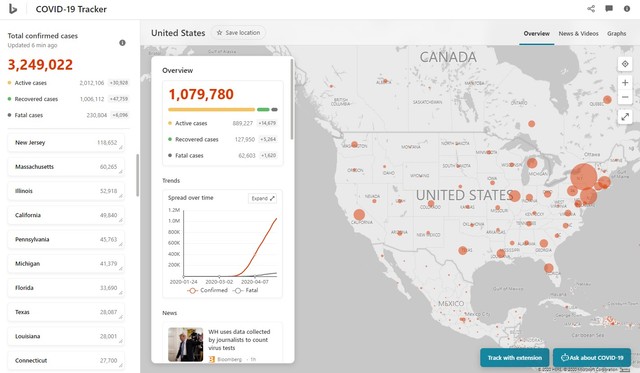
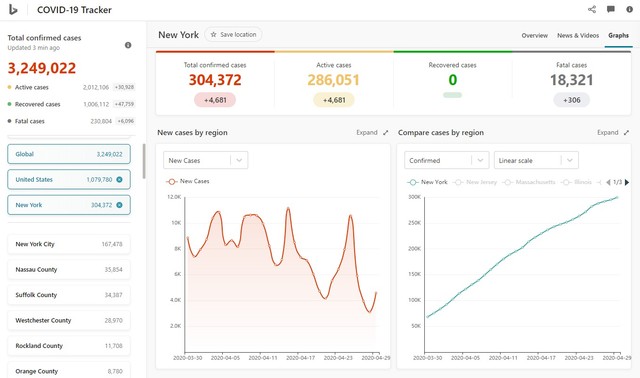
Coronavirus: How can data visualization improve health care decisions?
COVID-19 reshaped daily life and pressured healthcare systems worldwide, making fast, clear data visualization essential for public communication and operational decision-making. In 2025, many of the most useful COVID visualizations focus less on raw case counts (which are reported less consistently) and more on severity and early warning signals, like wastewater trends, sentinel testing, and modeled transmission.
A strong current example is the CDC’s National Wastewater Surveillance System (NWSS) dashboard, which visualizes SARS-CoV-2 wastewater viral activity across the U.S. by state and over time, offering a practical early indicator of rising community transmission.
For a global view, the WHO COVID-19 dashboard provides weekly summaries from international surveillance networks (including testing volumes and positivity), helping policymakers and health systems compare trends across regions.
What Are the Best Health Informatics Online Master’s for You?
There are a number of factors to consider when choosing the best health informatics master’s degree program for you.
One thing to remember is why you want to study health informatics and what you hope to gain by the end of your program. For example, your goal may be to expand your knowledge of health informatics, increase your earning potential, broaden your career options, or deepen your understanding of a specific area of health informatics. Keep your goal in mind as you research programs.
The best program for you may also depend on whether or not you’ll be working while you go to school, how much time you can dedicate to your studies, how soon you want to complete your master’s degree, and how much you want to spend. Here are some program factors to consider:
- Delivery format: You can pursue a health informatics master’s degree through an on-campus, online or hybrid program. Do you learn best in the classroom? Or, do you need the flexibility of a master’s in health informatics online program to study after you get home from work? Consider what delivery format is best for you.
- Location: If you want to pursue an on-campus program, location is an important factor. Think about how far you’re willing to commute to take classes and explore programs in your area.
- Duration: The average time it takes to earn a master’s degree in health informatics is two years. However, the duration depends on the program and the number of required credits. Some online and hybrid programs may allow you to complete your degree faster if they offer the option to complete coursework ahead of schedule.
- Focus: Are you interested in a certain aspect of health care informatics? Maybe you’re an experienced health care professional looking for a degree program that can help you expand a specific skill set. Read programs’ curriculum overviews or course catalogs to see if they align with your goals and interests.
- Cost: You know that earning your master’s degree in health informatics is an investment, but you want to make sure you can afford it. How much can you spend on your degree program? Check program pricing and see if payment plans, financial aid and scholarships are available.
School Listings
We found 54 universities in our directory offering Health Informatics programs.
If you represent a university and would like to contact us about editing any of our listings, or adding new programs, please send an email to info@mastersindatascience.org.
Browse schools by state
Arizona | California | Delaware | District of Columbia | Florida | Idaho | Illinois | Iowa | Kentucky | Louisiana | Maine | Massachusetts | Michigan | Mississippi | Missouri | Nebraska | New Hampshire | New York | North Carolina | Ohio | Oklahoma | Oregon | Pennsylvania | Rhode Island | South Carolina | South Dakota | Tennessee | Texas | Utah | Vermont | Washington
Arizona
Delaware
District of Columbia
Illinois
Iowa
Kentucky
Louisiana
Maine
Mississippi
Missouri
Nebraska
New Hampshire
Oklahoma
Oregon
Rhode Island
South Carolina
South Dakota
Utah
Vermont
Washington
Information last updated: January 2026